
- The Tale of Tears from Lakshapana Estate Amidst Indian Aid: “All We Have Inherited is a Life of Fear!”
- The Tragedy of Lakshapana Mulgama Lower Division
By Rahul Samantha Hettiarachchi
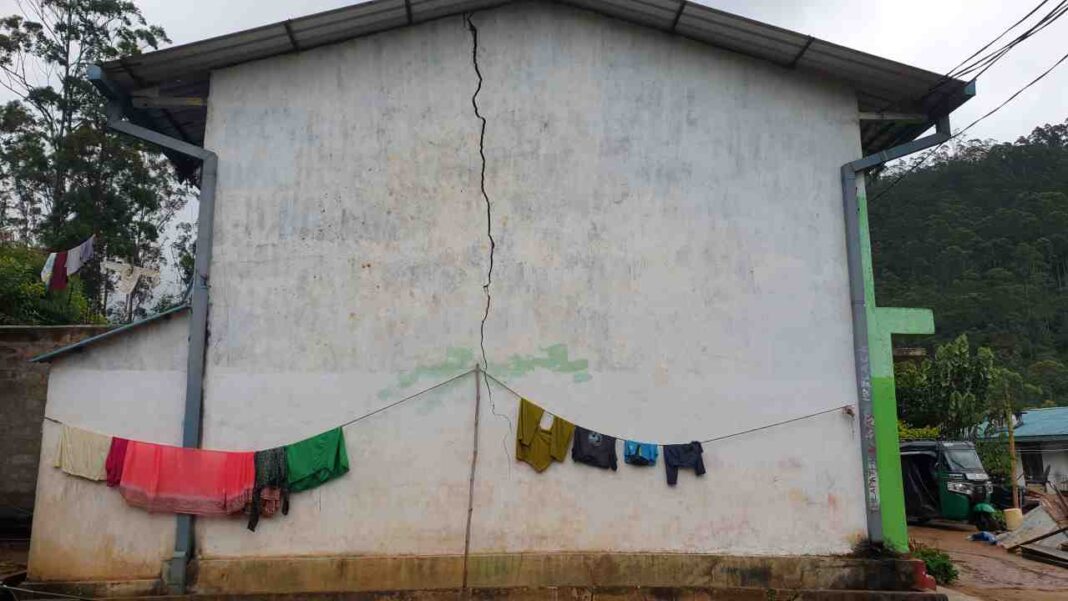
“The houses were built around 2004, but since 2011, cracks started appearing right through the middle… I live inside this cracked house with my three children, in constant fear of when it might collapse on top of us…”
The voice of Mrs. G. Yogeswari, living in the Mulgama Lower Division of Lakshapana Estate in the Seethagangula GN division, Maskeliya, contained not just helplessness, but a mortal fear of whether she would die crushed under her own roof.

The struggle of estate workers—who have shed their blood, tears, and sweat for generations to sustain the tea industry, the backbone of Sri Lanka’s economy—is nothing new. Enduring overcrowded line rooms, a lack of basic infrastructure, and social inequalities since the British colonial era, their sole dream was to secure a safe, proper shelter for their children.
To fulfill these aspirations, housing projects were launched in the estate sector with full financial assistance from the Indian government. However, despite receiving maximum foreign aid, local authorities failed to construct safe, quality housing in suitable locations and deliver them properly to the people. As a result, estate workers today are still forced to live in fear and uncertainty within their own villages.
The story shared by the residents of Lakshapana Estate’s Mulgama Lower Division stands as stark evidence of the sheer negligence of local state machinery and officials.
“No Drinking Water… Not Even Space to Dig a Pit Latrine…”
Despite voices raised for estate rights for decades, these people are still deprived of basic human necessities. Mr. Mudiyappam Francis Xavier, who received a house under Indian aid, shared his experience with deep sorrow:
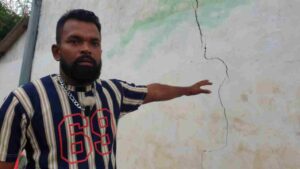
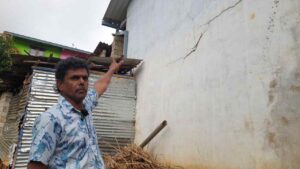
“As far as we know, these houses were built with Indian aid during Mr. Thondaman’s time. Even though houses were provided, there isn’t even enough space to dig a pit for a toilet. Furthermore, since we lack clean drinking water, we live with severe hardships. What we ask of the authorities is proper drinking water and adequate toilet facilities…”
“Our Grandfathers’ Line Rooms Burnt Down… Now the New Houses Are Cracking…”
The vulnerability of estate life is evident through generations of unexpected disasters. Mr. Rajkumar Thiyagu, who moved here after the line rooms where generations lived were destroyed by fire, explained the harsh reality they face:
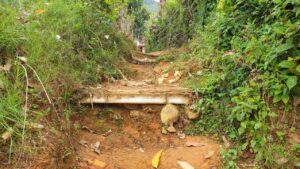
“We used to live in our grandfathers’ line rooms. After they caught fire and burnt down, we were brought here. These houses were built in 2004 with Indian government aid. It has been over 20 years since we were given these houses, yet we still don’t have a proper access road; even a vehicle can barely enter. Moreover, some of the built houses are cracking now. We told the authorities about this several times, but no one checks on it. The water pipes that were installed are broken, and we don’t even have clean drinking water…”
“Some Have Left Out of Fear That the Houses Will Collapse…”
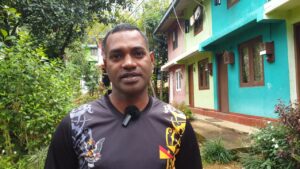
Serious questions arise regarding the quality of the constructed housing. Handed over to the public in 2004, these houses began deteriorating within a few years. Expressing his view on the matter, Mr. Rasaiyya Ramanikkam stated:
“These houses were handed over to us in 2004. Since 2011, they started cracking. Yet, we still live in these houses. Some people left out of fear, as we don’t know when the houses might collapse. Even though houses were built for us, facilities like electricity were obtained using our own personal money. There are no proper roads leading to the estate…”
“All Alone with Three Children in a Cracked House…”
Raising three children alone under the grueling hardships of the estate sector after losing a husband is no small feat. Mrs. G. Yogeswari’s experience is heartbreaking to anyone with empathy:
“The house was handed over to me in 2004. Since 2011, cracks started appearing. My house split right through the middle. Ever since that day, we have been living in fear. I used to live in a tiny room with my three children while working in the estate, which is why I was allocated this house. My husband passed away, and I still work in the estates to survive. Because the house is cracked, we live here in constant dread…”
Adding to this, Mr. N. Suresh, who resides near these houses, stated that although they informed the authorities about the cracking of these structures, no one has paid attention so far.
“You can see three consecutive two-story houses that have cracked along the row. None of these houses were completed properly; looking at them, it feels as though they took the money and put on a facade. This village is located very close to Sri Pada, yet as of now, there isn’t even a single street lamp in the village,” he revealed.

For the Attention of the Authorities!
It is the imperative responsibility of state officials and relevant authorities to properly manage donations and aid received from foreign governments, ensuring land suitability, structural quality, and basic infrastructure (such as access roads, clean drinking water, and toilet facilities).
Will the authorities keep their eyes closed until these helpless people living in the Mulgama Lower Division of Lakshapana Estate in Maskeliya, Seethagangula, fall victim to another tragedy or loss of life? We remind the authorities that it is their unyielding duty to manage foreign aid funds effectively and create a safe and humane living environment for these residents.