
New Dimensions in Indo-Lanka Relations and the Challenge of Sovereignty
From Crisis Lifeline to Strategic Partner: Indian Intervention and Sri Lanka’s Unresolved Dilemma
By Rahul Samantha Hettiarachchi
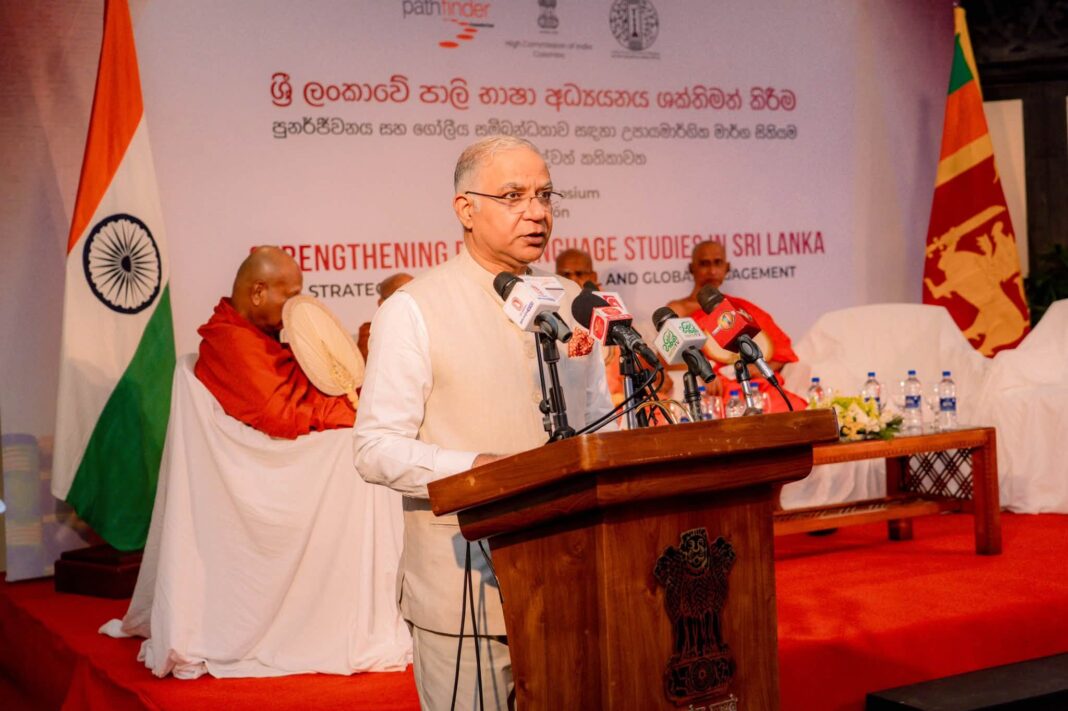
The total value of concessionary and development assistance provided by India to Sri Lanka has crossed the USD 7.5 billion mark, stated the High Commissioner of India to Sri Lanka, Santosh Jha. Speaking at a special seminar on Pali language studies held in Colombo on the 24th, the High Commissioner highlighted that over USD 850 million of this total has been extended purely as full grants.
These development projects span all 25 districts across the island, covering a broad spectrum including housing, healthcare, education, land and rail transport, renewable energy, as well as port and industrial development.
He also pointed out that amid the economic collapse faced by Sri Lanka in 2022, India moved swiftly to provide essential fuel, medicines, and food supplies well before the finalization of the International Monetary Fund (IMF) bailout program. This immediate intervention prevented a complete paralysis of Sri Lanka’s critical import sector and subsequently laid the groundwork for Indian investments to flow into energy, infrastructure, and digitalization projects in Nuwara Eliya, Trincomalee, and the Northern and Eastern provinces.

The Indian administration states that these aid initiatives align with New Delhi’s “Neighbourhood First” policy and the “MAHASAGAR” security and economic vision. However, regional analysts observe that amid the ongoing power struggle for strategic dominance in the Indian Ocean region, New Delhi’s economic and political shadow falls heavily over the governance in Colombo.
While this assistance delivers immediate benefits to Sri Lanka—such as job creation and infrastructure enhancement—political and economic commentators draw attention to the potential risks that over-reliance on a single nation poses to the country’s independent foreign policy.
Beyond healthcare, energy, and transportation, bilateral relations between the two nations have expanded into cultural and religious spheres. Following the Indian government’s grant of “Classical Language” status to the Pali language in October 2024, measures were taken to further strengthen Buddhist cultural and academic ties between both countries. Additionally, India extended immediate relief through Operation ‘Sagar Bandhu’ during the recent cyclone ‘Ditwah’ disaster.