


By Rahul Samantha Hettiarachchi
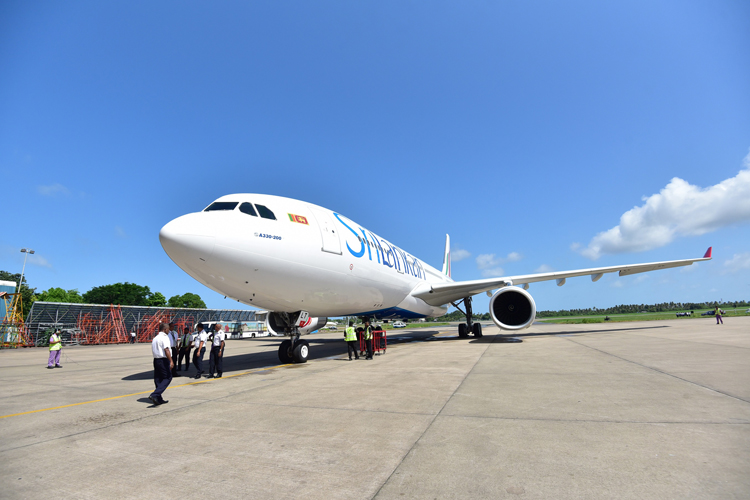
SriLankan Airlines, which has been facing a severe financial crisis, has refused to provide information regarding the newly acquired Airbus A330-200 (4R-ALT) aircraft. The company, in a letter dated June 30, 2025 (registered under reference number 286), rejected the request for information, labeling it a “commercial secret.” This rejection was a response to an application made to SriLankan Airlines on June 6, 2025, under the Right to Information Act, No. 12 of 2016.
This refusal to disclose information raises serious questions about the transparency and accountability of public funds, particularly within a government that frequently boasts about its commitment to transparency. At a critical juncture for the future and financial stability of SriLankan Airlines, such secretive deals risk further eroding public trust in the transparency of state institutions.
The Information Request and the Response
On June 6, 2025, an information request was sent to SriLankan Airlines, seeking details about the new Airbus A330-200 aircraft under six specific questions. The main requests included the total value of the deal, the country and institution from which the aircraft was obtained, its year of manufacture, and the company and the monthly lease payments. The request also included a query for annual income and expenditure data for SriLankan Airlines from 2023 to June 6, 2025.
In its response, provided under Section 25(1) of the Right to Information Act, SriLankan Airlines confirmed that it had not purchased the aircraft but had obtained it on an eight-year lease. The response also stated that the aircraft was manufactured by Airbus in 2011.
However, SriLankan Airlines refused to provide the most crucial information of the deal: the monthly and annual lease payments for the aircraft. The company cited the reason that this information constituted a “commercial secret” and that its disclosure could adversely affect the competitive position of the contracting parties. This rejection was based on Section 5(1)(d) of the Right to Information Act.
The Question of Public Funds and Secrecy
SriLankan Airlines is a state-owned enterprise, and all its transactions are ultimately connected to public funds. As an institution that has been incurring losses for many years, every one of its transactions should be transparent and accountable. In such a situation, withholding the lease payment details for a new aircraft by labeling it a “commercial secret” raises many serious questions.
The decision to lease a 2011-manufactured aircraft for a long period of eight years, and the refusal to disclose the monthly lease payments, creates doubt about the fairness and commercial viability of the deal. The airline’s refusal to provide this information prevents taxpayers from knowing whether this deal will be yet another financial burden on the already loss-making airline.
While Section 5(1)(d) of the Right to Information Act provides for the protection of commercial secrets, the applicability of this clause to transactions involving public funds in a state-owned enterprise needs to be debated further. Additionally, Section 5(4) of the Act strongly emphasizes the principle of public interest. It must be pointed out that there are instances where the public’s right to information should be prioritized over commercial secrecy.
An Attempt to Conceal Income and Expenditure Information?
The information request also sought detailed annual income and expenditure data for SriLankan Airlines from 2023 to June 6, 2025. In response, the airline simply stated that the relevant annual reports were published on its official website: www.srilankan.com/en_uk/plan-and-book/right-to-information. This action can be interpreted as an attempt to avoid giving a direct answer, as it directs the requester to a large document rather than providing the specific information requested.
Impact on the Future
This transaction by SriLankan Airlines should spark a broader debate on the financial management and transparency of state institutions. Further investigation into the airline’s actions is necessary to affirm the public’s right to information and ensure accountability within state institutions.
An appeal against this rejection was submitted to the designated officer of the public authority on July 3, 2025, but as of August 9, 2025, no response has been received. On August 6, 2025, an appeal regarding this refusal was filed with the Right to Information Commission, and many are now watching to see what decision the commission will make. This incident presents a new challenge to Sri Lanka’s democratic process, highlighting the obligation of state institutions to provide information and maintain transparency in the use of public funds.


good