

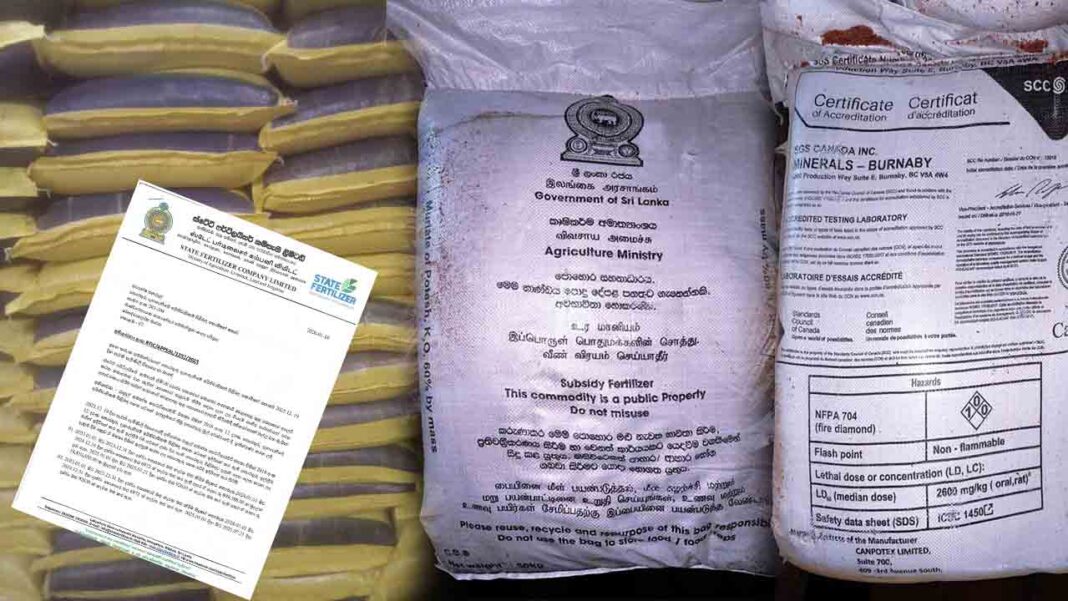
- The Mystery of the 19 Million Rupee Re-bagging Project
- Re-bagging costs added to the final price of fertilizer
By Rahul Samantha Hettiarachchi
In a context where the farming community—the backbone of the country’s agriculture—is struggling, a serious crisis in state resource management has come to light through the Right to Information (RTI) Act. This revelation exposes a massive expenditure incurred by the State Fertilizer Company for re-bagging MOP (Muriate of Potash) fertilizer between 2023 and July 2025.
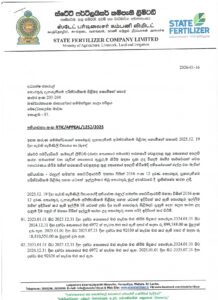
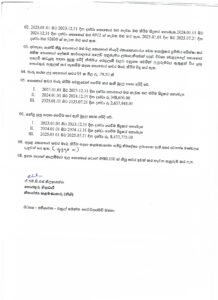
Most surprisingly, the State Fertilizer Company initially refused to disclose this information, citing “business secrets” and “competitive market challenges.” However, following a mandate from the Right to Information Commission, data revealed that over 19 million rupees (Rs. 19,709,938) was spent solely on “changing covers.”
Evading Information
Based on a tip-off regarding the re-bagging of MOP fertilizer, an RTI application was filed on July 21, 2025. On August 12, 2025, the State Fertilizer Company rejected the request, claiming that disclosing “commercial and trade secrets would adversely affect the competitive position of third parties.”
Following an appeal (RTIC/APPEAL/1252/2025), the RTI Commission ordered the public authority to provide a written submission explaining how this information qualified as a trade secret. Subsequently, the authority released the data on January 16, 2026. This sequence of events raises a question for any independent citizen: Was the Information Officer of the State Fertilizer Company deliberately attempting to mislead the applicant?
Packaging Costs Skyrocket Year-on-Year
An analysis of the data provided under the RTI Act shows that zero expenditure was incurred for re-bagging in 2023. However, the situation changed drastically in 2024.
- In 2024: 6,972 bags were re-bagged at a cost of Rs. 899,388.
- Jan–July 2025: 92,630 bags were re-bagged in just seven months, costing Rs. 18,810,550 (exceeding 18.8 million rupees).
The fact that re-bagging costs surged 20-fold—from 900,000 to 18.8 million—in just a year and a half raises serious suspicion.
Why Did White Bags Turn Yellow?
The company claims the bags were changed because the stored fertilizer covers had become “discolored.” They state that the fertilizer originally in white bags was transferred to new yellow covers only after lab tests confirmed the quality was intact.
However, a critical question remains: Why was such a massive stock (4,980.100 metric tons) stored for so long that it became discolored? It appears millions in public funds were spent to cover up the damage caused by the poor management of state property.
Imbalance in Labor and Machinery Costs
A closer look at the expenditure breakdown reveals further anomalies:
| Time Period | Labor Charges (Rs.) | Machinery Charges (Rs.) |
| 2023 | 0.00 | 0.00 |
| 2024 | 348,600.00 | 0.00 |
| 2025 (Until July) | 2,637,945.00 | 8,432,775.00 |
While no machinery costs were recorded in 2024, over 8.4 million rupees was spent on machinery (notably on a rental basis) in 2025. While a single fertilizer cover is priced at Rs. 79.50, the Management Committee decided to add the total cost of this re-bagging process to the final selling price of the fertilizer. Ultimately, the burden falls on the innocent farmer.
Management Failures and Outsourcing
According to minutes from a Management Committee meeting on May 19, 2025, the decision was made to outsource the MOP re-bagging to a third party, citing “labor shortages” and “Yala season demand.” One must investigate whether there is an irregularity behind this “re-packaging project” that bypassed internal state resources to pay massive sums to external parties.
Notably, while the Chairman had instructed that re-bagging should ideally be done during the “Off-Season,” it was actually carried out at a high cost via external parties right as the cultivation season began.
Without the use of the Right to Information Act, the details of this nearly 20-million-rupee expenditure to turn “white bags into yellow” would never have reached the public. Authorities must now answer whether they tried to label this as a “business secret” to hide state inefficiency and the misuse of public funds.
Who are the officials responsible for allowing the fertilizer to sit until it discolored? Who received the contract for this nearly 20-million-rupee project? These are not just statistics; they represent the sweat and tears of the country’s taxpayers. While the current government frequently boasts of building a corruption-free nation, it is questionable whether they are merely protecting a group of officials. Despite previous reports on irregularities within the State Fertilizer Company, no proper investigation has been conducted.
It is the responsibility of the relevant authorities to conduct a formal audit or inquiry into this waste of public money. However, such an inquiry must be genuine—and not like “asking the thief’s mother for a prediction of the thief’s future.”