
By Dr. Aleksander (Sasha) Bodiroza, UNFPA Regional Director a.i. for Asia and the Pacific
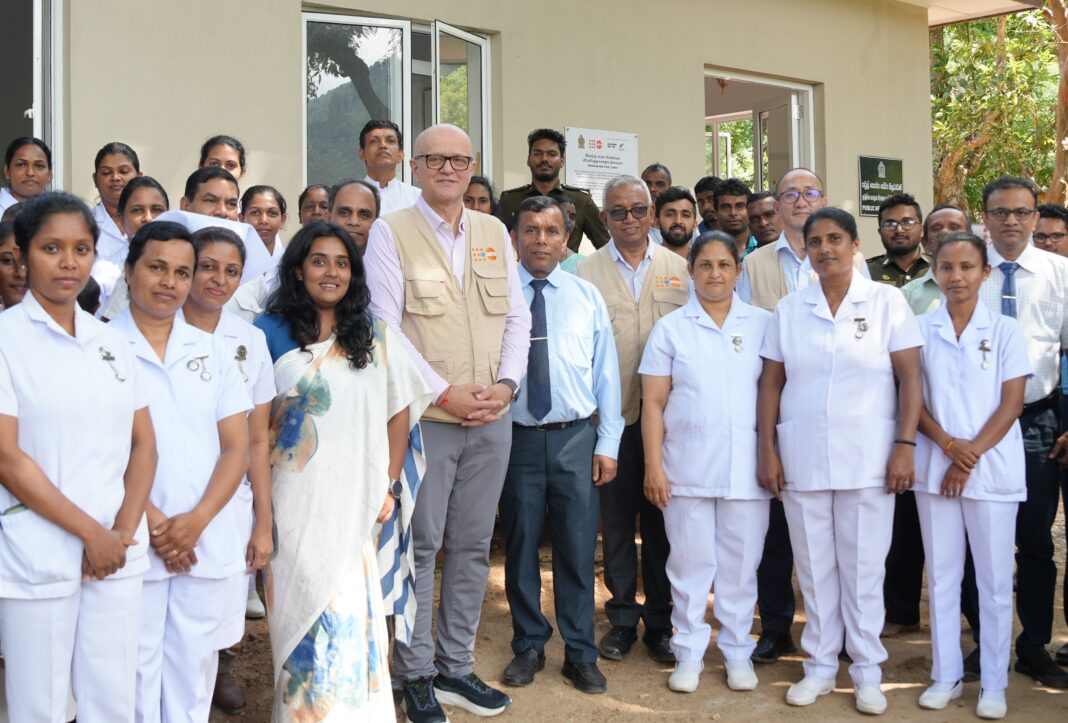
The road to Meeriyabedda winds through the hills above Passara, past tea estates and isolated communities where distance makes basic healthcare difficult to reach. At the end of that road sits a small, pale-pink clinic. Recently renovated, it serves as a crucial lifeline for the women and families who depend on it.
During my recent visit to Sri Lanka, I held important discussions in Parliament, at the Prime Minister’s Office, and with government partners regarding population change, development, and the country’s future. I was deeply struck by the national determination to protect Sri Lanka’s hard-won human development gains.
Meeriyabedda gave those conversations a human shape.
There, mothers waited with newborns for routine check-ups while health workers moved with practiced purpose. In that small clinic in the Badulla district, the future felt less like an abstract policy debate and more like a promise being kept, one family at a time.
Sri Lanka is entering a defining chapter. Its population is ageing, fertility patterns are shifting, and young people are navigating rapid economic and social changes. At the same time, climate-related disasters are placing unprecedented pressure on communities and essential services.
The challenge is not simply preserving Sri Lanka’s progress in health and education, but making that progress resilient to demographic shifts and climate shocks.
Cyclone Ditwah demonstrated what this challenge looks like on the ground.
When the cyclone struck Sri Lanka late last year, it affected more than 2 million people across all 25 districts. Floods and landslides damaged roads, disrupted communications, and made essential services harder to access. Among those affected were an estimated 520,000 women of reproductive age, including over 22,570 pregnant women and 193,000 older women.
For a pregnant woman, isolation can quickly become dangerous. A short trip to a health facility can suddenly turn into a multi-hour journey across damaged roads, putting routine check-ups and skilled care out of reach.
Working alongside local health authorities, UNFPA (the United Nations Population Fund) helped restore community health services in some of the hardest-to-reach areas, including Meeriyabedda. An abandoned building was transformed into a fully functioning community clinic, complete with living quarters for a resident midwife to ensure uninterrupted care.
During my visit, a midwife shared that the community had begun to make the space their own. Mothers brought potted plants to decorate the newly renovated building so it would feel less like an institution and more like home.
There is profound power in that gesture.
A plant on a clinic windowsill speaks of trust; it signals that people expect the clinic to remain. True recovery is not merely repairing what a storm destroyed—it is about rebuilding something communities can rely on long after the emergency recedes.
In Nuwara Eliya, a public badminton court had become a temporary shelter for 35 displaced families. Without partitioning, privacy was non-existent. For a breastfeeding mother or an adolescent girl managing her period, this absence of privacy was an erosion of basic dignity.
UNFPA helped establish a safe space where women and girls could access counselling, protection services, and, importantly, a door they could close. Staff explained that this safe space also enabled women to seek help for violence and discrimination that had begun long before the cyclone.
Humanitarian responses cannot be measured solely in supplies delivered or structures rebuilt. Shelter, food, and medicine matter, but so do privacy, safety, bodily autonomy, and the ability to ask for help without fear.

In Kandy, the true meaning of resilience became even clearer.
At the Medical Office of Health in Doluwa, doctors and midwives recalled the days following the cyclone when communication lines went down. With no cellular signal and roads blocked, they relied on physical registers, walking routes, and hand-delivered messages. Pregnant women were tracked, and care reached them despite the complete blackout.
We often talk about resilient health systems as if they are built purely of concrete, technology, and policy documents. While those elements are vital, resilience in Doluwa was also a midwife carrying a register, a doctor who knew which road was blocked, and a message passed from person to person until it reached the right home.
These frontline realities point to Sri Lanka’s central task: ensuring development gains endure as the population ages and climate stresses intensify.
Demographic shifts are not problems to be solved; they are signals that policies must adapt to how people live today. This requires data-driven decision-making, strong primary health networks, and sustained investment in frontline health workers who hold the line during a crisis.
Sri Lanka’s experience offers a lesson that resonates across Asia and the Pacific: resilience is not a slogan.
It is a clinic that reopens. A safe space inside a crowded shelter. A midwife carrying a register on foot when networks fail. And a nation determined to plan beyond today’s crisis to prepare for tomorrow’s changes.
UNFPA is proud to work alongside the Government and people of Sri Lanka on this journey—using evidence to inform policy, strengthening systems that protect health and dignity, and ensuring demographic change becomes an opportunity to expand rights and choices for all.
Sri Lanka’s next chapter will be written in national strategies, but its heart will be found in places like Meeriyabedda, where a small clinic, a resident midwife, and a few plants on a windowsill show us what lasting progress and hope look like.